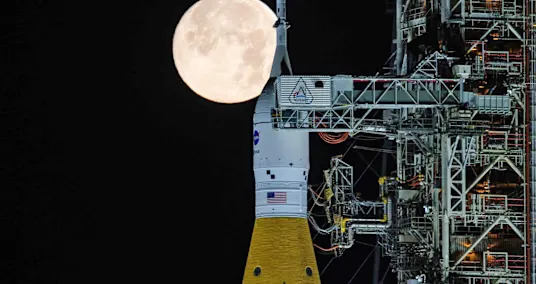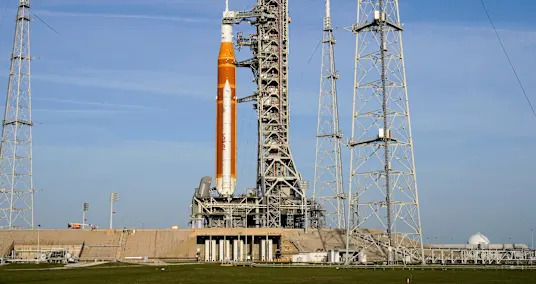
CAPE CANAVERAL, Fla. (AP) — After weeks of fuel leaks and other issues, NASA faced a trouble-free countdown Tuesday on the eve of astronauts' first trip to the moon in more than half a century.
Officials reported the moon rocket was doing well on the pad, and the weather looked promising. Forecasters put the odds of favorable conditions at 80%.
“Everybody's pretty excited and understands the significance of this launch,” said senior test director Jeff Spaulding.
The four astronauts assigned to the Artemis II mission will become the first lunar visitors since Apollo 17 in 1972. They’ll zip around the moon without landing or even orbiting, and come straight back.
It's the closest NASA has come to launching Artemis II. Hydrogen fuel leaks bumped the flight from February to March, then clogged helium lines pushed it to April. The space agency has only a handful of days every month to send the three Americans and one Canadian to the moon.
Confident that all of these problems are fixed, the launch team plans to begin fueling the 32-story Space Launch System rocket on Wednesday morning for an evening send-off.
___
The Associated Press Health and Science Department receives support from the Howard Hughes Medical Institute’s Department of Science Education and the Robert Wood Johnson Foundation. The AP is solely responsible for all content.
LATEST POSTS
- 1
 Different Film Classification: What's Your Go-To for Amusement
 - 2Bayer sues COVID vaccine makers over mRNA technology
- 33 back-to-back storms forecast to bring snow and surges of cold air across the Midwest to the Northeast
- 4One third of Spanish pork export certificates blocked since swine fever outbreak, minister says
- 5RFK Jr. releases new dietary guidelines with emphasis on protein, full-fat dairy


- The Best Competitors of the 21st Hundred years
- IDF strikes Hamas terror cell operating near Israeli troops in northern Gaza
- Kids get diseases like lupus, too. As researchers hunt better treatments, this camp brings joy
- I visited every country by 25. Antarctica showed me how much I still hadn't seen.
- Countdown to Artemis II: What to know about NASA's moon mission
- Bird flu poses risk of pandemic worse than COVID, France's Institut Pasteur says
- Mars orbiter sees 'butterfly' crater spread its wings on the Red Planet
- Doctors thought he had cancer. An offhand suggestion led to a rare diagnosis.
- Magnetic fossils may reveal ancient creature's internal 'GPS system'